YMCA Retirement Fund Annuity Tracker
Redesigning a legacy retirement calculator into a long-term income tracking experience for 90,000+ participants, while helping establish a new in-house product practice.
Role
Lead Product Designer
Scope
End-to-end UX, research, information architecture, interaction design, stakeholder alignment
The Problem
For years, retirement planning at YRF centered around a single question:
“How much will I receive when I retire?”
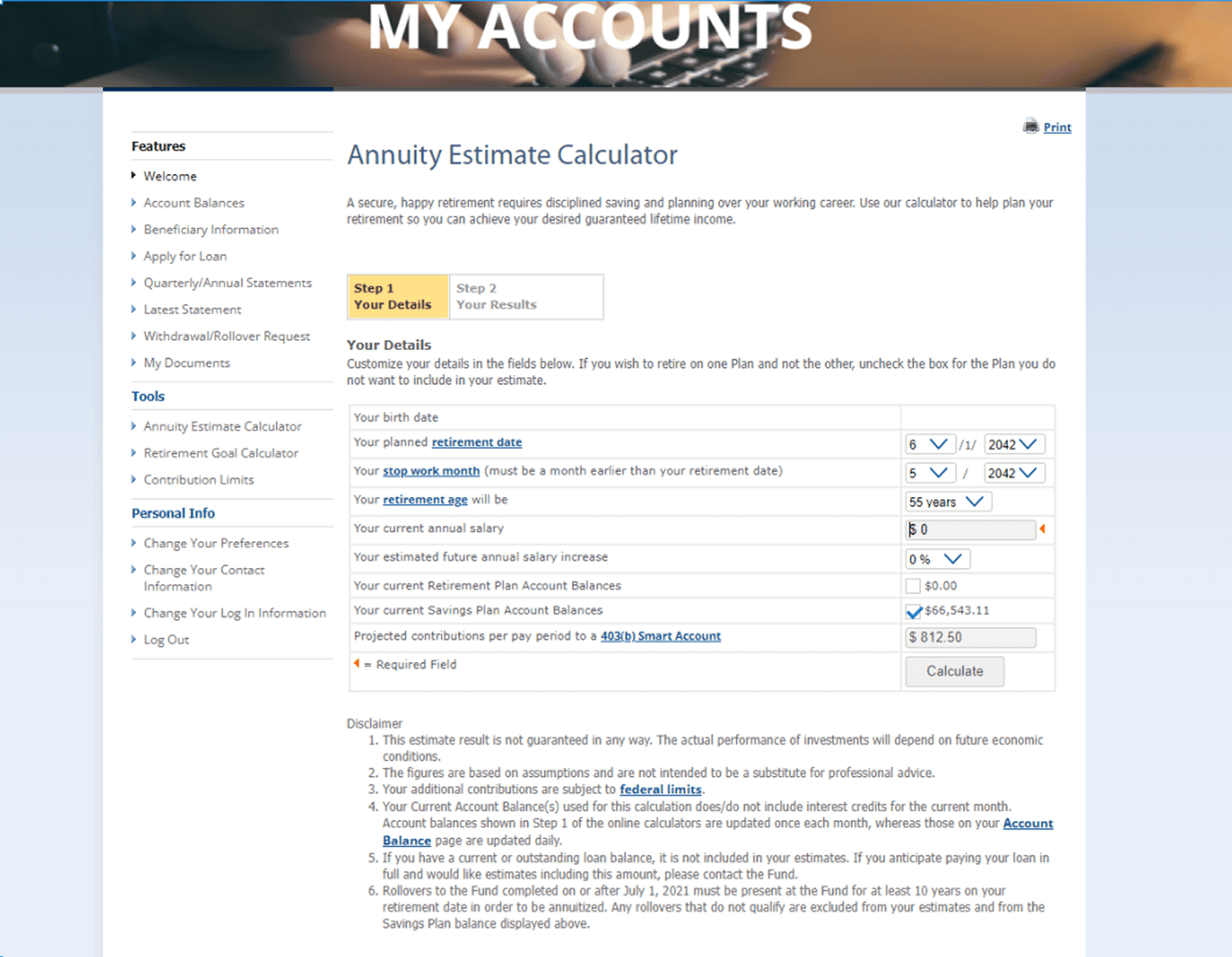
The existing calculator reflected that mindset. Participants could run isolated scenarios, but the experience was static, technical, and primarily useful to members nearing retirement. Younger participants often disengaged entirely.
Internally, the tool created friction as well. Results did not always align with final annuity estimates. Some options were incomplete or misleading. Common questions still required direct support from call center representatives.
The issue was not just usability. It was framing.
Organizational Context
In 2019, new executive leadership brought a modernization vision for the Fund’s future. In 2020, during early pandemic disruption, I joined a newly formed internal product team within IT. This would be the team’s first major participant-facing initiative.
Stakeholders were unfamiliar with agile delivery, user research, and iterative design. We needed to improve the calculator, but also demonstrate the value of a user-centered product approach.
Phase 1 needed to deliver visible wins while building trust and creating space for a deeper backend overhaul.
Phase 1: Stabilize and Build Trust
Phase 1 Execution
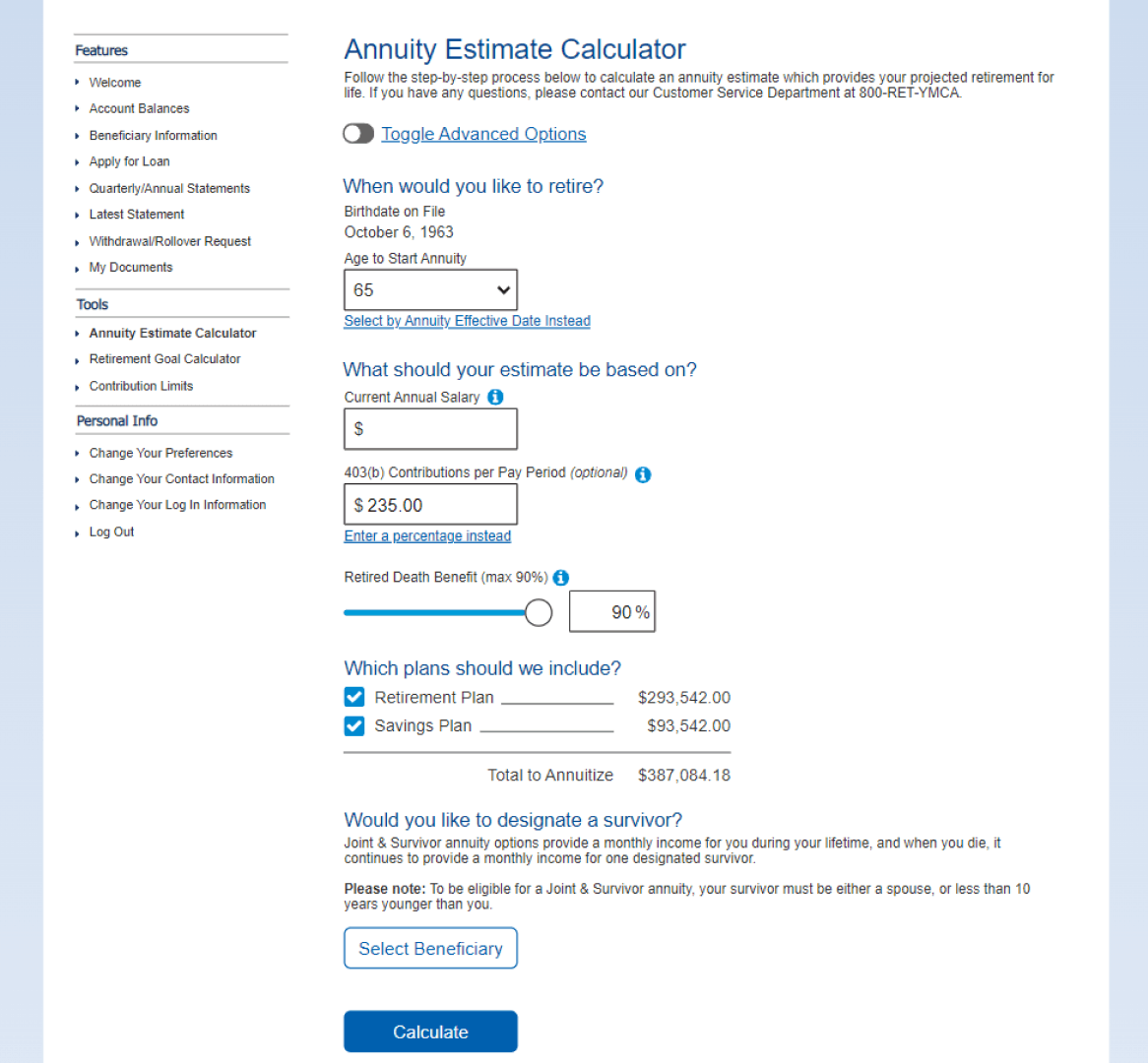
We introduced a guided, question-based approach to replace the dense, form-heavy experience.
Key changes included:
• Progressive disclosure of advanced options
• Clearer visibility into how beneficiary selections impacted results
• Improved explanation of annuity options directly within context
• Removal of misleading defaults
The redesign focused on clarity, accuracy, and transparency, while maintaining backend compatibility.
Introducing User Research
This project marked the first time the organization conducted direct participant interviews.
I led 12 one-on-one qualitative sessions to assess:
• General retirement planning habits
• Familiarity with annuities and the existing calculator
• Ease of running calculations using a prototype of the redesigned experience
The interviews validated usability improvements but revealed something more important.
Participants did not think about retirement as a single calculation. They thought about it as uncertainty. Many were unsure how current contributions translated into long-term outcomes. The existing framing encouraged passive checking rather than active planning.
This insight reshaped the direction of the product.
Phase 2: Reframing Retirement
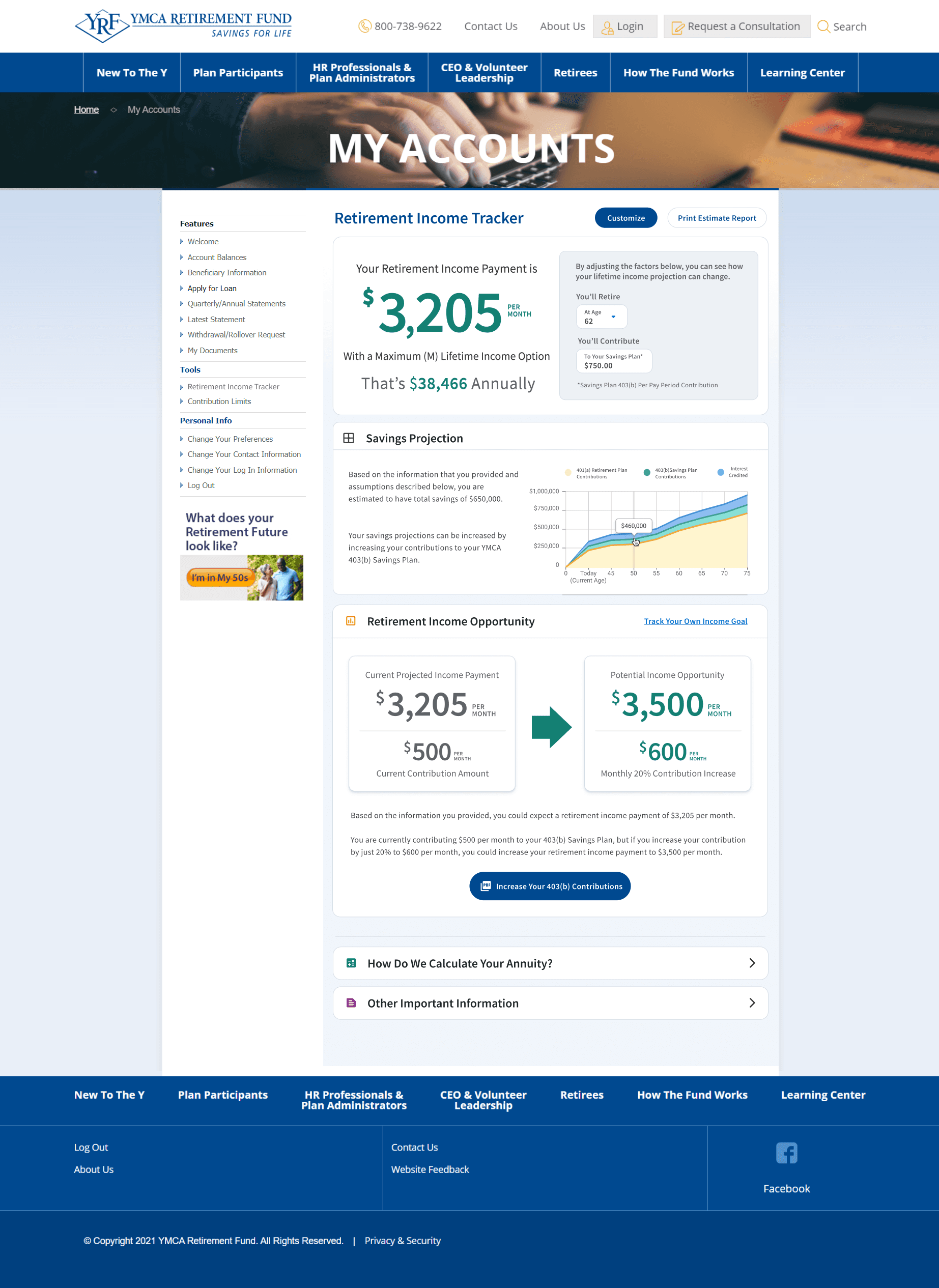
Phase 2 Design Decisions
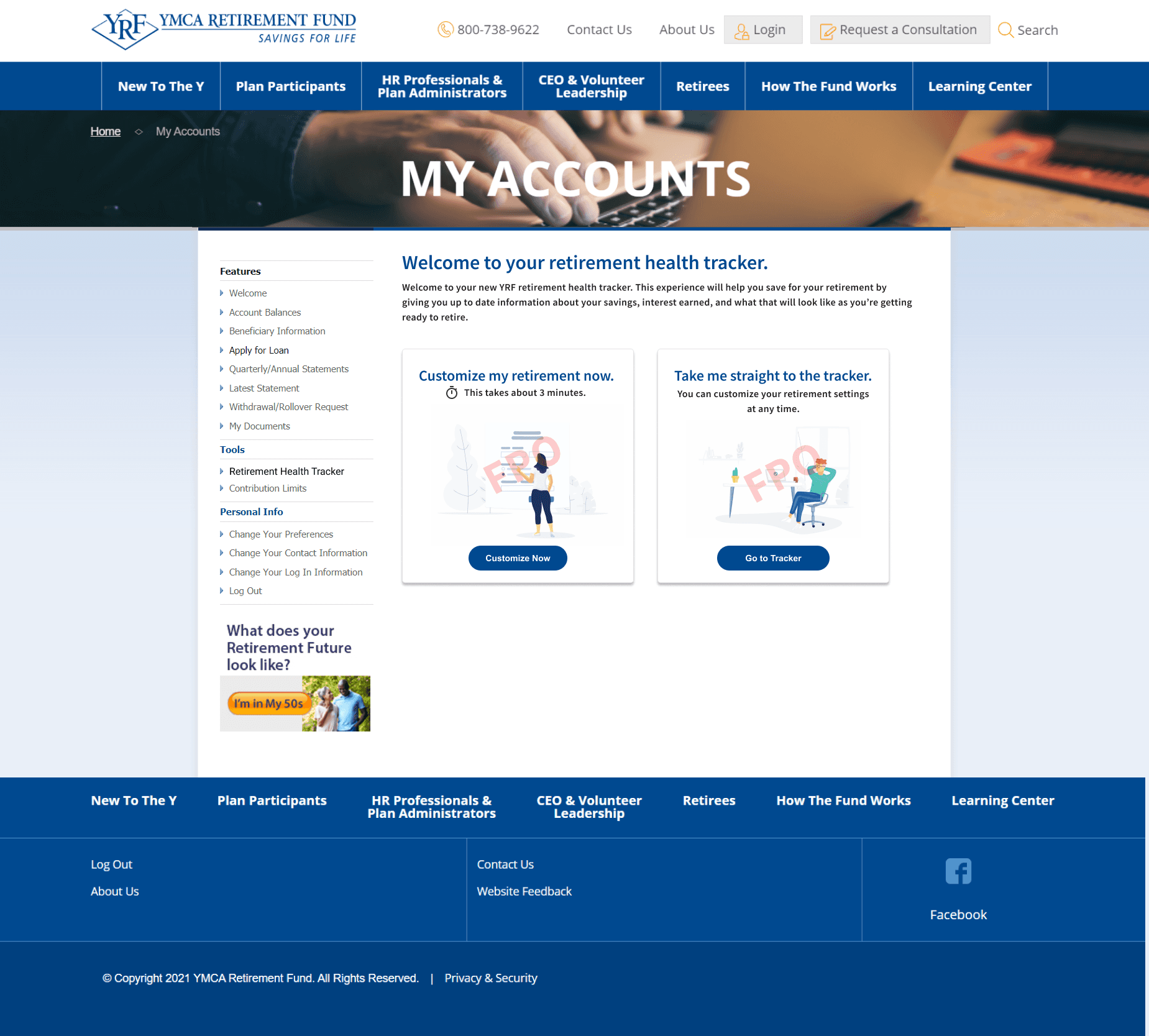
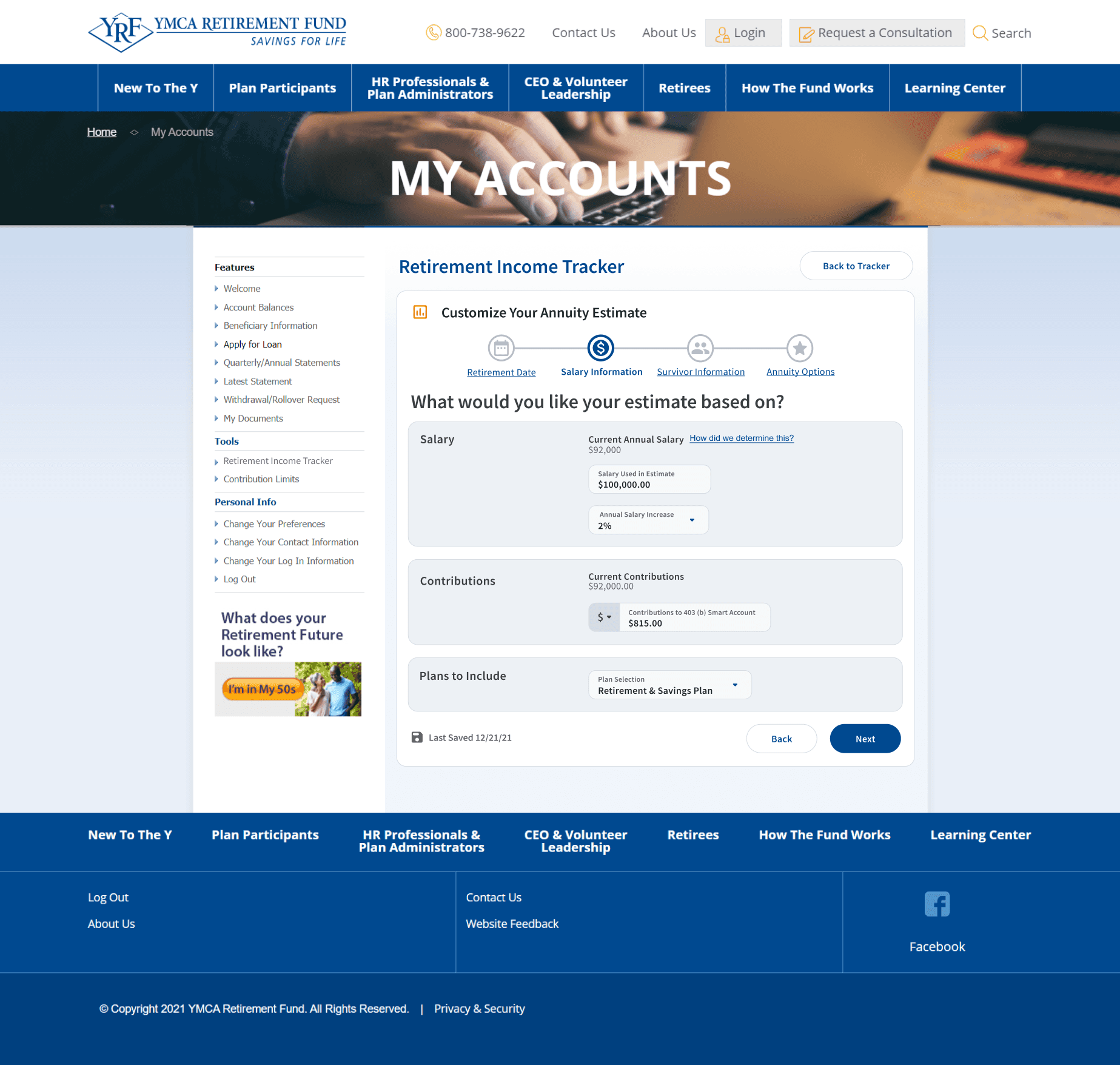
Transition to a Tracker Model
Participants could track a primary annuity option over time rather than comparing multiple isolated scenarios.
Default to the Most Common Path
The system defaulted to the most popular annuity option while preserving flexibility for advanced users.
Behavioral Framing Through Opportunity
Instead of emphasizing retirement “gaps,” which risked discouragement, we introduced an Income Opportunity card.
Small contribution increases were framed in tangible lifetime payout terms.
For example:
“If you increase contributions by X, your estimated monthly income at retirement increases by Y.”
This reframing shifted the experience from evaluative to motivational.
Iteration and Refinement
We continued qualitative testing and small refinements throughout Phase 2.
Participants responded positively to the opportunity framing. The experience felt less overwhelming and more actionable. The tracker model made retirement feel ongoing rather than distant.
Outcomes
Rolled out to 90,000+ plan participants.
Established a foundation for in-house product development within a traditionally operations-driven organization.
Introduced user research as a core input to product decisions.
Shifted retirement messaging from static calculation to ongoing income planning.
Reduced reliance on representative-only features by making key insights directly accessible.
Personal Reflection
Looking back, the most consequential shift in this project was not visual, but strategic. We began by improving a calculator. We ended by reframing retirement as an ongoing income journey.
What I learned is that organizational change often has to be sequenced. If we had pushed directly for a tracker model at the outset, it likely would have met resistance. Phase 1 created the credibility needed for Phase 2. In future projects, I’m more intentional about mapping not just the product roadmap, but the stakeholder readiness roadmap.